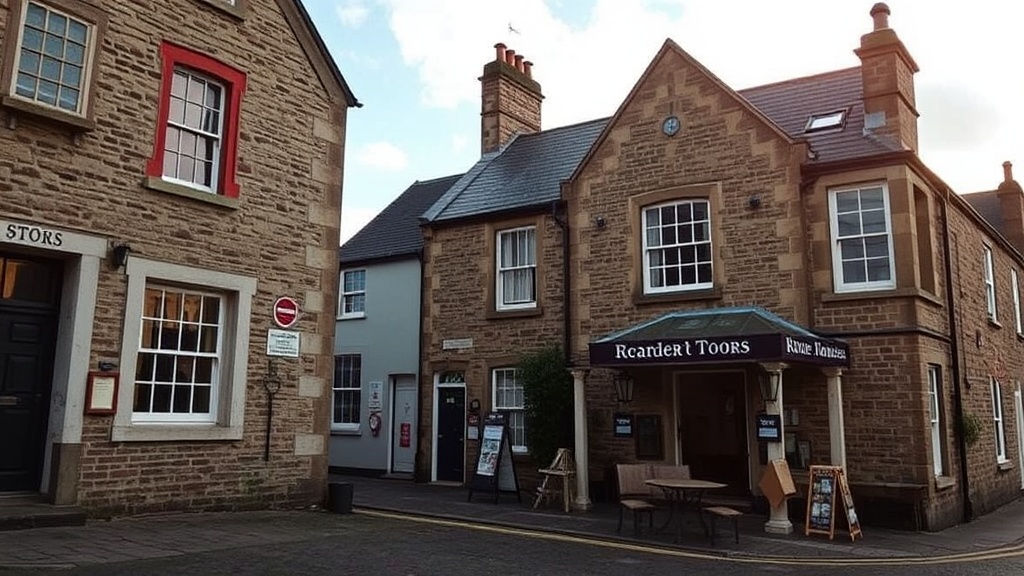
How to Access Town Records and Archives in Saint Andrews by-the-Sea Without the Runaround

Most people assume researching local history or accessing municipal records in Saint Andrews by-the-Sea requires appointments, special permissions, or insider connections. That's not the case — our town's archives and record systems are more accessible than many residents realize, but the process isn't always well-publicized. Whether you're tracing property boundaries for a renovation, researching family history tied to our fishing heritage, or simply curious about when your home on Montague Street was built, knowing where to look saves hours of frustration.
Where Are the Records Actually Stored in Saint Andrews by-the-Sea?
The town maintains several distinct collections, and they're not all in one place — which confuses plenty of locals. The Town Hall on 136 Reed Avenue houses current administrative records: property tax assessments, recent council minutes, building permits from the past two decades, and zoning documentation. These are public records by provincial law, and the clerk's office will pull files during regular business hours without an appointment for most requests.
For older materials — anything predating the 1990s — you'll need to visit the Saint Andrews Heritage Centre on Prince of Wales Street. This volunteer-run archive holds photographs, maps, business directories, and personal papers from founding families. Their hours are limited (Thursday through Saturday, 10 a.m. to 4 p.m. during peak season), so plan accordingly. The Heritage Centre operates independently from town administration, which means their indexing systems differ — what you find in one location won't necessarily cross-reference with the other.
The Ross Museum, operated by the Saint Andrews Historical Society, maintains a separate collection focused on maritime artifacts and shipbuilding records. If your research touches on the fishing industry, lighthouse keepers, or coastal trade, this is your resource. They accept walk-ins but recommend emailing ahead for specific inquiries — their volunteer staff rotates and expertise varies by day.
How Do I Request Property Records for My Saint Andrews by-the-Sea Home?
Property research trips up more residents than any other records request. Here's the straightforward path: start at the Assessment and Taxation Department at Town Hall. They maintain the current parcel map and assessment rolls — legally public documents that show lot dimensions, building square footage, and ownership history back to the 1980s. There's no fee for viewing these records, though photocopies cost fifty cents per page.
For older property transactions, you'll need to cross-reference with the Service New Brunswick Property Assessment Online database, which tracks ownership changes back to the mid-20th century. This digital system covers the entire province, but it's particularly useful for Saint Andrews by-the-Sea properties that have stayed within families for generations — common along Water Street and in the historic core.
The Heritage Centre holds original deed books and mortgage records from the 1700s through the 1960s. These aren't digitized, so you'll handle fragile bound volumes with staff supervision. If you're researching a specific address, bring the modern street number and any former names the property might have held — many Water Street buildings were known by family names rather than numbers prior to standardization in the 1950s.
What About Birth, Death, and Marriage Records?
This is where provincial versus municipal jurisdiction creates confusion. Saint Andrews by-the-Sea doesn't maintain vital statistics — those records sit with Service New Brunswick's Vital Statistics Office. However, our local archives hold substitutes that often prove more valuable for genealogists: church records from St. Andrews Presbyterian (now St. Andrews United), St. Croix Parish, and the early Baptist congregations document baptisms, marriages, and burials predating civil registration in 1888.
The Charlotte County Archives in nearby St. Stephen holds county-level records including probate files, wills, and estate inventories for Saint Andrews by-the-Sea residents. Many locals don't realize this resource exists just twenty minutes away — it's worth the drive for comprehensive family research. Their collection includes school records from the one-room schoolhouses that dotted the peninsula before consolidation, business licenses for waterfront merchants, and even some police court dockets from the 1920s.
For recent vital records (within the past fifty years), you'll need to prove direct lineage or written permission from the individual named. Privacy laws tightened considerably in the 1990s, so don't expect to pull your neighbor's birth certificate without justification.
Can I Research the History of My Business or Building?
Commercial properties in Saint Andrews by-the-Sea carry layered histories, particularly along Water Street and King Street where buildings have cycled through multiple uses. The Heritage Centre maintains a building inventory that assigns historical significance ratings to structures throughout the town — useful if you're considering exterior modifications that might trigger heritage review.
The New Brunswick Provincial Archives in Fredericton holds microfilm of early Saint Andrews newspapers, including the Saint Andrews Beacon and its predecessors. These papers documented business openings, fires, renovations, and commercial disputes with detail that modern coverage rarely matches. The Provincial Archives offers inter-library loan for microfilm reels, meaning you can review them at the Saint Andrews Public Library on Patrick Street rather than driving to Fredericton.
For maritime businesses — hotels, fishing operations, boat builders — the Fisheries and Oceans Canada regional office in St. Andrews (the federal research station, distinct from our town) maintains surprisingly extensive records of commercial licenses, catch statistics, and harbor improvements. These aren't centralized with town records because fisheries fall under federal jurisdiction, but the local office has been accommodating to historical researchers seeking documentation of family businesses.
What Should I Bring to Access Physical Archives?
Archival research requires patience and preparation. Start with specific names, dates, or addresses — "anything about my house" wastes your time and the volunteers'. Bring pencils (pens aren't permitted near historical documents), a camera or phone for photographing records (always ask permission first), and a laptop for transcription. The Heritage Centre has limited electrical outlets, so charge devices beforehand.
Dress in layers — the archive spaces in Saint Andrews by-the-Sea maintain cooler temperatures for preservation, which feels brisk during shoulder seasons. If you're handling photographs from the 1920s or earlier, staff may require cotton gloves (provided) to prevent oils from damaging emulsions.
Consider joining the Saint Andrews Historical Society — membership includes access to the society's research library and occasional workshops on archival methods. They meet monthly at the W.C. O'Neill Arena complex, and the annual fee supports preservation efforts throughout town. Several longtime members have deep knowledge of local families and can point you toward records you might otherwise miss — oral history still carries weight in a community this size.
The records of Saint Andrews by-the-Sea belong to all of us who live here. Whether you're settling a boundary dispute, preparing a heritage designation application, or simply satisfying curiosity about who walked these streets before us, the documentation exists — it just requires knowing which door to knock on. Start at Town Hall for recent materials, branch to the Heritage Centre for historical depth, and don't overlook the provincial and federal repositories that hold pieces of our local story. Our town's history isn't locked away; it's waiting for residents curious enough to seek it out.